
Educational content only — not medical advice, not a diagnosis, and not a substitute for care from a qualified professional.
Exercise positions
Lying, seated, or standing: which Kegel position?
The exercise is the same in all three positions. What changes is how much help you get from the rest of your body, and how closely the practice resembles real life.
Men's Pelvic Fitness · Jakarta, Indonesia
Start here
Why position matters at all
When you lie down, gravity and posture are working in your favour, so fewer other muscles need to be active. That makes it easier to notice whether the pelvic floor is contracting on its own. Sit up or stand up and the picture changes: your hips, trunk, and legs are already engaged, and the contraction has to compete with that background effort. This is why the same rep can feel obvious in one position and faint in another.
Reading your own body in a new position takes a few sessions. If you are unsure whether the muscles are switching on at all, the general introduction to the pelvic floor walks through where they sit and what a first gentle contraction feels like before you add reps.
Supported positions
Lying down takes the load off your hips and trunk, so the pelvic floor contraction has less competition and is easier to identify.
Loaded positions
Seated and standing practice ask the muscle to work while your hips and legs are already busy. The movement feels smaller, and that is expected.
Same timing throughout
Hold, release, and full relaxation between reps stay identical across all three positions. Only the amount of help from other muscles changes.
Three ways to practise
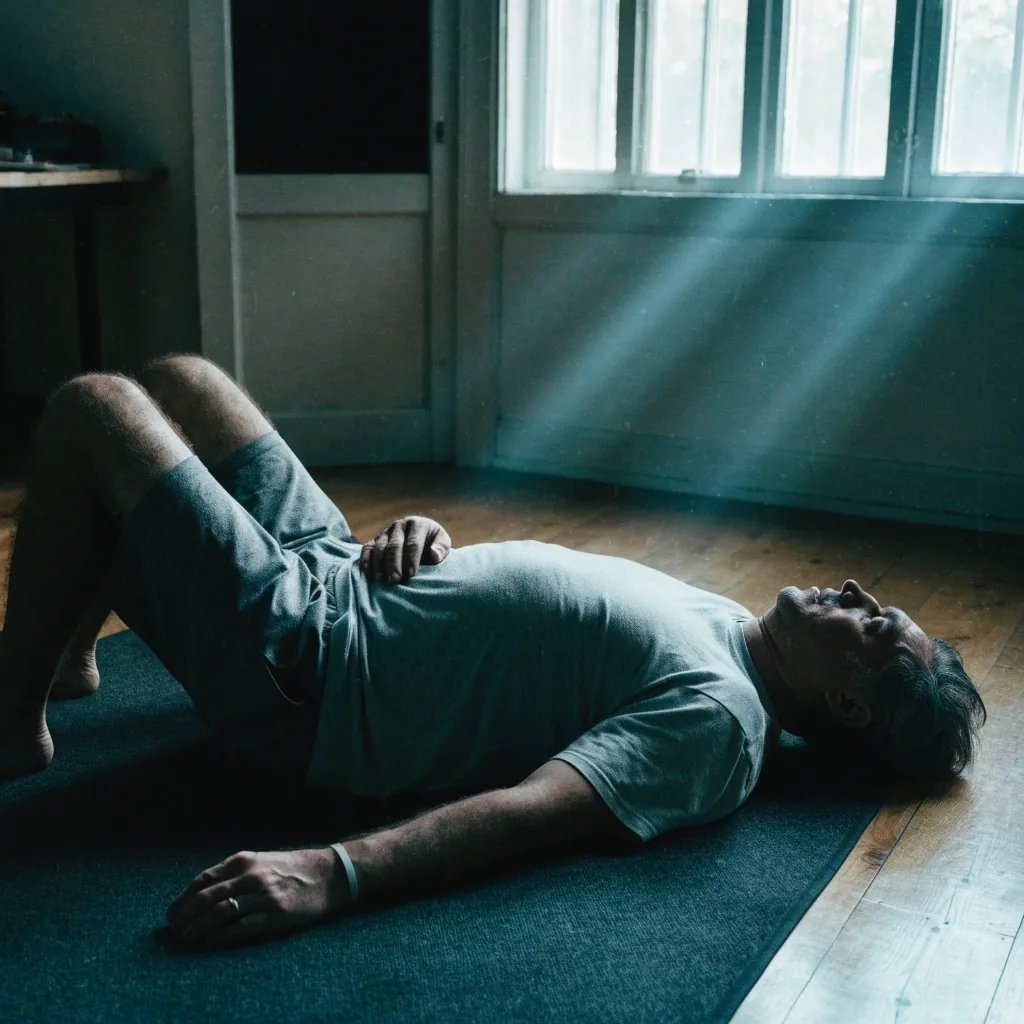
Knees bent, feet flat, lower back resting comfortably — the setup most beginner instructions describe.
Beginner default
Lying-down Kegels
Lying down is the position most beginner instructions use, and it reduces other muscle effort while you learn the movement. Bend your knees, keep your feet flat, and let your lower back rest comfortably. It appears in Harvard Health guidance as one of the possible positions and in step-by-step patient handouts, which says something about how well it works as a starting point. Use it until the contraction is easy to find without hunting for it.
A cushion under the head or a folded towel under the hips can help if your lower back feels strained by the flat floor. Keep your jaw and shoulders loose — if your neck is working, the rest of the body tends to join in.
Setup
Knees bent, feet flat and hip-width apart, arms relaxed at your sides, lower back in a comfortable position rather than pressed down.
What to notice
A gentle inward lift, then a full release. The stomach, thighs, and buttocks stay quiet — if they grip, the effort is spreading.
When to move on
Once the contraction is clear from the first rep to the last, seated practice becomes the next useful step.
Quiet practice
Seated practice
Seated reps are the easiest to fit into a working day, because nobody around you can tell you are doing them. Sit with both feet flat on the floor and your weight even. The movement will feel smaller than it does lying down, and that is normal rather than a sign you are doing it wrong. This is also where you start to test whether you can isolate the pelvic floor while your hips are already busy holding you upright.
Chair choice matters more than people expect. A firm seat with your hips roughly level with your knees keeps the pelvis neutral; a deep soft sofa lets you sink back, which changes the angle and makes the contraction harder to read. If you notice yourself perching forward or slumping, that is a signal to reset rather than to push on.
Setup
Both feet flat, weight even across the seat, spine tall but not rigid, hands resting on your thighs.
What to notice
A smaller-feeling lift than lying down. That is the hips already working, not a weaker contraction.
Where it fits
At a desk, on a commute, during a quiet moment at home — anywhere you can sit still for a short set.
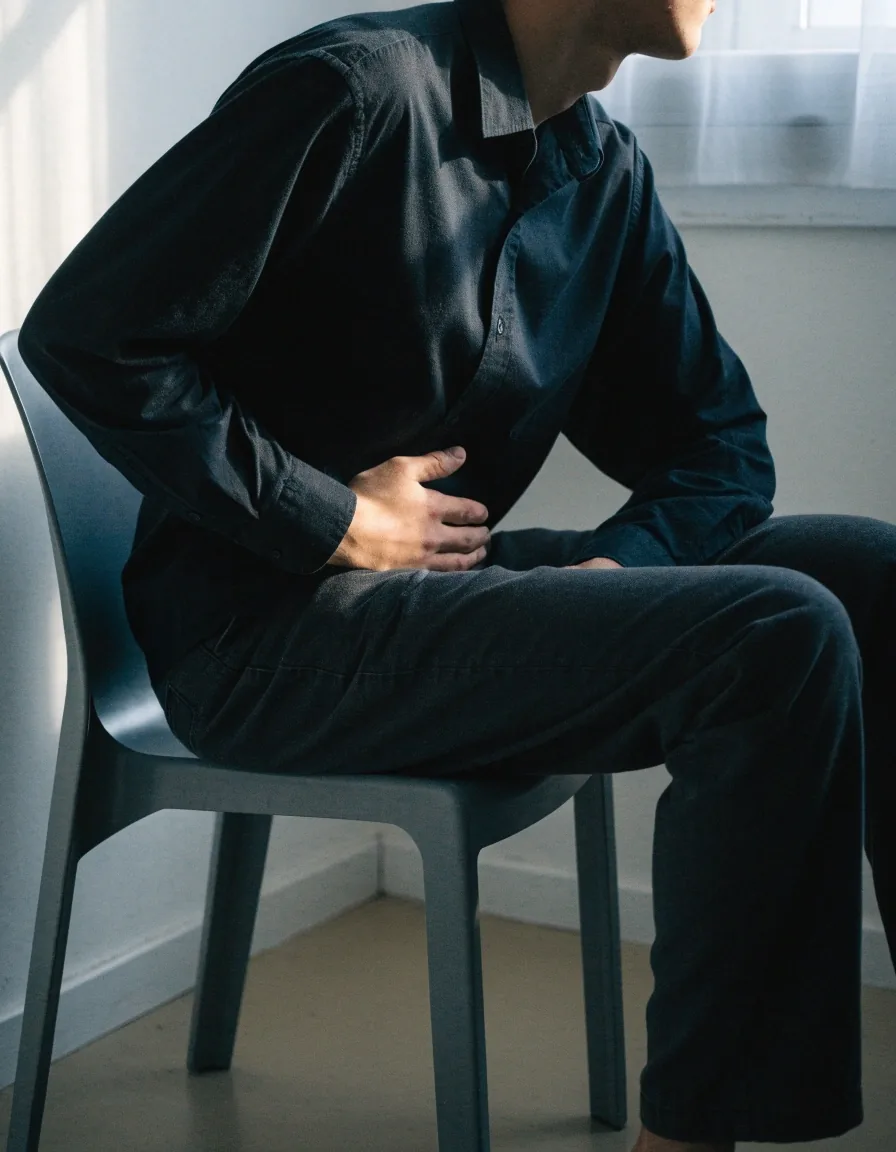
A firm chair with hips level to the knees keeps the pelvis neutral for seated reps.
Progression
Standing practice
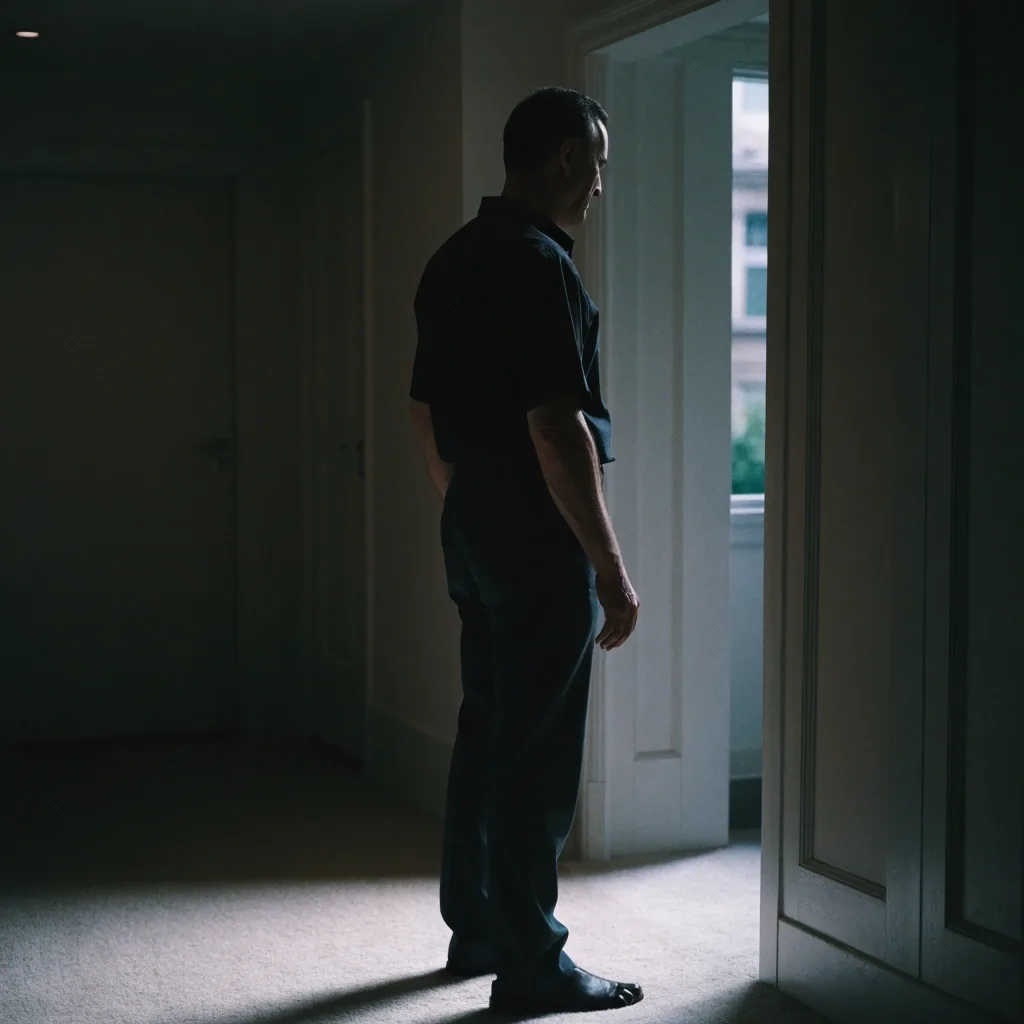
Standing is typically presented as a progression after the movement is learned lying down or sitting. It helps translate the exercise into real-world settings, which is the point, since coughing, sneezing, and lifting all happen while you are upright.
Start with your feet about hip-width apart and your weight balanced. If your knees or buttocks take over, go back to seated practice for a few more sessions.
Start narrower
If your feet drift wide or your weight tips onto one leg, bring the stance back in and rebalance before the next rep.
Watch the bracing
Holding your breath or clenching the glutes usually means standing is running ahead of the movement itself. Drop back to seated practice.
Use real moments
Waiting for a kettle, standing at a sink, queuing — brief standing sets fit into ordinary moments without a dedicated session.
A simple comparison
Read down the isolation column to judge how easy the contraction is to find, and down the daily-life column to judge how close the practice sits to the situations where the muscle is actually needed.
Position
Isolation
Daily life
Lying down
Easiest to isolate — the least competing muscle activity.
Least like daily life. The right place to learn the movement first.
Seated
Moderate isolation — the hips are already holding you up.
Easy to fit into a working day, and quiet enough to do in company.
Standing
Hardest to isolate — the whole trunk is engaged.
Closest to the situations where the muscles are actually needed.
All three
Same hold and release timing, same breathing cue.
Same full relaxation between reps, whichever position you choose.
The last reps tell you more than the first
How to know you are ready to progress
Progress when the contraction is clear in your current position from the first rep to the last, without your stomach, thighs, or buttocks joining in. If the last reps are messy, stay where you are for another week. There is no schedule to keep. Moving to standing before the movement is reliable usually means practising a sloppy version of the exercise.
A useful habit is to compare the first two reps against the last two rather than counting totals. When the last two match the first two in clarity, the position has done its job and the next one becomes worth trying. If they do not match, the rep count was simply ahead of the muscle.
Start the Kegel routinePosition and the breathing cue
Counting out loud works in every position, and it becomes more useful as you progress. Standing reps are the easiest place for the breath to get lost, because the rest of your body is working and holding the breath feels natural. If you cannot speak the count, you are straining. That single check is worth more than any rep target.
The same check works lying down and seated. Speak the count softly while you hold, then let the breath out fully as you release. If speaking feels awkward in a shared room, mouth the numbers — the point is that the breath keeps moving rather than locking up.
Count out loud
If the count stops, the breath has stopped with it. Ease the effort down until the count returns.
Release fully
The rest between reps matters as much as the hold. Let the muscles settle before the next contraction begins.
Same in all three
The breathing cue does not change between lying, seated, and standing practice — only how easy it is to keep.
Discomfort during a position is information about setup, not a target to push through.
If a position is uncomfortable
Discomfort is information. If lying down is uncomfortable, try a different knee angle or a cushion under the head. If seated practice is uncomfortable, check whether you are perching forward or slumping. If standing causes pain, stop and treat that as a reason to get an assessment rather than to push through. One 2024 men's pelvic health article makes the same point about matching the approach to the person.
Small setup changes solve more discomfort than people expect. A folded towel under the knees shifts the lower back angle; a firmer chair changes how much the hips have to hold; standing with one heel slightly raised can ease a tight calf that is quietly pulling the pelvis. Change one thing at a time so you can tell what helped.
Lying down
Try a cushion under the head, a towel under the knees, or a slightly different knee angle.
Seated
Check for perching forward or slumping, and move to a firmer seat if the pelvis keeps rolling back.
Standing
Pain is a reason to stop and ask a qualified professional, not a stage to work through.
Common questions about position
Can I skip lying down and go straight to standing?
You can, but most instructions treat standing as a progression because it is harder to isolate. Starting seated or lying down usually makes the movement easier to learn.
Does seated practice work as well as lying down?
It works on the same muscles. The contraction can feel less obvious because your hips are already engaged, so it is often used once the movement is familiar.
Should I feel it in my stomach or thighs?
No. If your stomach, thighs, or buttocks are gripping, the effort is spreading. Go back to an easier position and reduce the rep count.
How long should I stay in one position?
Until the contraction is clear from the first rep to the last, and the last reps are not messy. That can be days or weeks — there is no fixed schedule to keep.
More questions about practice, timing, and what to expect are collected on the Common Questions page.
Pick a starting position and stay there for now
Most people start lying down, move to seated practice once the contraction is easy to find, and add standing reps last. Nothing about that order is mandatory — it simply keeps the movement learnable. If a position feels wrong on a given day, the honest move is to step back one level rather than to force the rep count.
When you are ready to put the positions into a week, the routine builder lays out a simple structure you can adjust. If you want the background first, the pelvic floor basics page explains what the muscles do and why position changes how the work feels.
Where to continue
-
Kegel exercises for men
How the contraction is taught and what a session looks like.
-
Everyday male wellness habits
Everyday habits that sit alongside pelvic floor practice.
-
About us
Who writes this material and how the guidance is put together.
Questions about the material can go to our contact page, or call +62 21 573 1838 during working hours, Monday to Friday, 9:00 AM – 6:00 PM (WIB).
This page is general education about exercise positions. It does not replace an assessment from a qualified professional, and it makes no promises about what any individual will experience.