
Educational guidance only. This page is not medical advice and does not replace an assessment by a doctor or physiotherapist.
A step-by-step guide for practising at home
Kegel Exercises for Men, Step by Step
How to find the muscles, time the hold and release, keep breathing through each rep, and build a short routine you can repeat in an ordinary room with no equipment.
Men's Pelvic Fitness · Jakarta, Indonesia
Start here
Before your first rep
This page walks through the basic male Kegel routine: how to find the muscles, how to time the hold and release, and how to keep breathing while you do it. It is written for someone practising at home in Indonesia with no equipment and no supervision. Read the whole thing once before you start, because the details about relaxation and breathing matter as much as the squeeze.
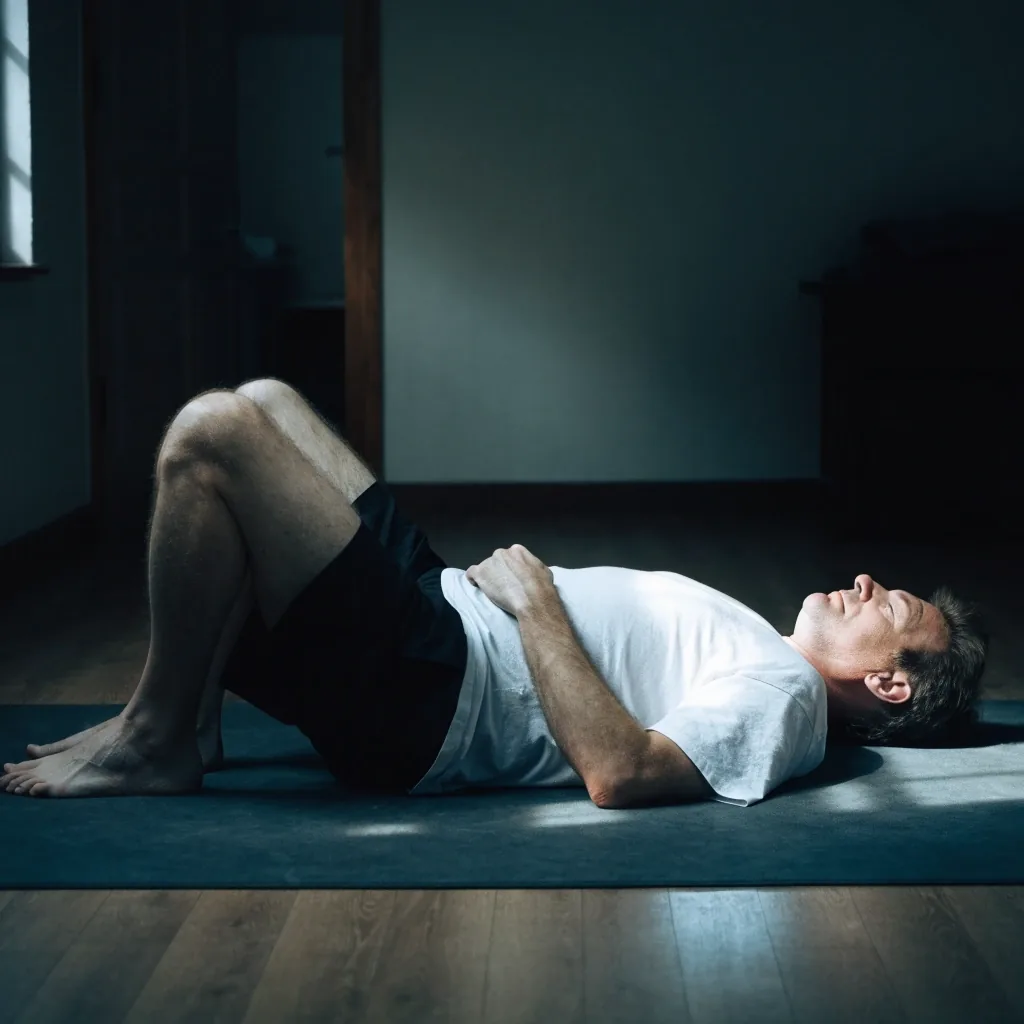
Get comfortable first. Lying down with knees bent is the position most guides suggest for beginners, since it takes the load off other muscles and lets you concentrate on the contraction itself. Empty your bladder beforehand so you are not practising while you need to go. Give yourself a couple of slow breaths to settle before the first rep, and keep the room quiet enough that you can count out loud without feeling silly.
Set up the room
A quiet floor, a mat or a folded towel, and a phone left in another room. Nothing about the routine needs equipment, so anything you bring in becomes a reason to postpone it.
Empty your bladder
Go before you start. Practising with a full bladder makes the sensation harder to separate from the urge to urinate, and it turns a short set into a rushed one.
Settle with two slow breaths
Let the breath out longer than you let it in, then start. If you begin already braced, the first rep becomes a whole-body effort instead of a pelvic floor contraction.
Finding the muscles, then the hold and release
One time only
Locating the muscles
Squeeze the muscles you would use to stop the flow of urine. That is the discovery cue, and it appears in several men's Kegel guides because it works quickly. Notice where you feel it and what it does not involve: your stomach should stay soft, your thighs should stay quiet, and your buttocks should not grip. Once you have the sensation, stop using the toilet as your practice space. Guides are clear that repeatedly interrupting urine flow is not a training method.
Stomach
Stays soft and moves with the breath, with no tightening or drawing in.
Thighs
Quiet, not pressing together or lifting off the mat to help.
Buttocks
Do not grip. A clenched seat usually means the effort has moved away from the pelvic floor.
Breath
Keeps moving the whole time. If it stops, the contraction has become a strain.
If the sensation stays vague after a couple of honest attempts, leave it for another day. A single clear rep is more useful than ten guesses, and if you feel pain rather than effort, that is a reason to stop and ask a doctor or physiotherapist.
The hold and release cycle
Tighten, hold for a short count, then relax completely and let the muscles rest for about the same length of time. Many resources describe slow, controlled reps as the standard, and the rest half of the cycle is treated as part of the exercise rather than dead time. If the release feels vague, that is common early on and worth paying attention to. A clean release is what allows the next rep to be a real contraction instead of a leftover clench.
Tighten
Draw the pelvic floor up and in, the way you felt it during the discovery cue. Aim for a firm, controlled squeeze rather than the hardest one you can manage.
Hold
Hold for a short count at first. Keep the count honest: if the squeeze fades halfway, the hold is already too long for this week and should come down.
Release fully
Let go completely and rest for roughly the same count. The rest is where the muscle recovers, so cutting it short is what makes later reps feel strained.

A working example of one rep
The numbers below are a starting shape, not a target. Move up only when the last rep of a set feels as controlled as the first, and move back down when it does not. Nothing on this page is a promise about what you will feel after a given number of weeks.
Squeeze
Count one, two, three out loud while the pelvic floor stays drawn up.
Rest
Count one, two, three again with everything released and the breath moving freely.
Repeat
Work through a handful of slow reps, then stop for the day while the quality is still good.
Extend later
When three counts feel easy, try four or five. Lengthen the hold before you add more reps.
Counting out loud so you keep breathing
Holding your breath during a contraction turns the movement into a full-body strain. Counting out loud is the cue several guides recommend, because speech is not possible while you are holding your breath. Start with a short count, then extend it as the movement becomes easier. The aim is a relaxed, repeatable rep, not a maximum-effort squeeze.
The count is also your pace control. Rushing the numbers shortens both halves of the cycle at once, and the release is the first thing to disappear when you rush. If you notice you have stopped speaking, stop the set, take two slow breaths, and begin again from a smaller number.
Sets, reps, and how to add more
Begin with a small set, something like a handful of slow reps, and do one or two sets a day. Add reps only when the current number feels controlled from the first to the last, and drop back if the quality falls apart at the end. This is the same logic that runs through our daily routine builder, where rest days are built in rather than treated as failure. More is not better if the extra reps are strained.
A practical way to judge a set: if you cannot describe the last rep the same way you described the first, the set was too long. Write the number down somewhere you will see it tomorrow, and change only one thing at a time.
Mistakes beginners make
None of these are unusual, and all four are easy to correct once you know what to watch for.
Holding the breath
The most common one, and the easiest to notice if you are counting out loud.
Squeezing everything
Buttocks, thighs or stomach joining in usually means the effort is coming from the wrong place.
Too many reps too soon
A big first week is often followed by stopping altogether, which is the outcome to avoid.
Skipping the release
Practising only the squeeze leaves the muscle half-contracted, so the next rep starts from a clench.

Moving from lying down to sitting and standing
Once the contraction is familiar lying down, try the same reps in a chair with your feet flat on the floor. Seated practice is harder because your hips are already engaged, so expect the movement to feel less obvious. Standing comes later, and it is the position that matters most in daily life, since coughing, sneezing, and lifting all happen upright. The exercise positions page compares the three in more detail.
Compare practice positionsKeeping it going past week two
Attach the routine to something you already do, such as a morning habit or a moment after you sit down at your desk. Keep the sessions short enough that skipping one does not feel like a decision. If you miss a day, resume on the next one rather than doubling up. Consistency across weeks is what the guidance in patient handouts is built around.
Some men find it easier to practise at the same hour each day; others fit a set into a gap between tasks. Both work, and the version you actually repeat is the better one. If you have had pelvic surgery, a prostate procedure, or ongoing pain, ask a doctor or physiotherapist before you start a routine on your own.
Common questions about the routine
Short answers to the three things men ask most often before they start.
Can I do Kegels while sitting at my desk?
Yes, once the contraction is familiar from lying-down practice. Seated reps are quieter and easier to fit into a working day, though the movement may feel less obvious at first.
What if I cannot tell whether I am contracting the right muscles?
Stop and reset, then try the discovery cue again once. If it stays unclear, or if you feel pain, an assessment by a doctor or physiotherapist is the sensible next step.
Is it bad to hold my breath during a rep?
It works against the exercise. Counting out loud while you hold is a common way to keep breathing, and it also keeps the pace slow.
Where to go next
This page covers the basic routine only. The pages below take it further: what the pelvic floor does, how the three practice positions compare, and how to spread the sets across a week without turning them into a chore.
Asking a question
If something on this page does not match what you feel, write to us and we will point you to the right chapter. We cannot assess your pelvic floor from a message, and we do not offer a diagnosis.
- [email protected]
- Phone
- +62 21 573 1838
- Office hours
- Monday to Friday, 9:00 AM – 6:00 PM (WIB)
- Address
- Jl. Kemang Raya No. 28, Bangka, Mampang Prapatan, Jakarta Selatan, DKI Jakarta 12730, Indonesia
Educational content only
This page describes a training method and does not diagnose, treat or prevent any condition. Results differ between people, and no routine replaces an assessment by a doctor or physiotherapist. If you feel pain, stop and seek advice.